Buying a home, step by step
Buying and selling · 3 min read · revised August 2026
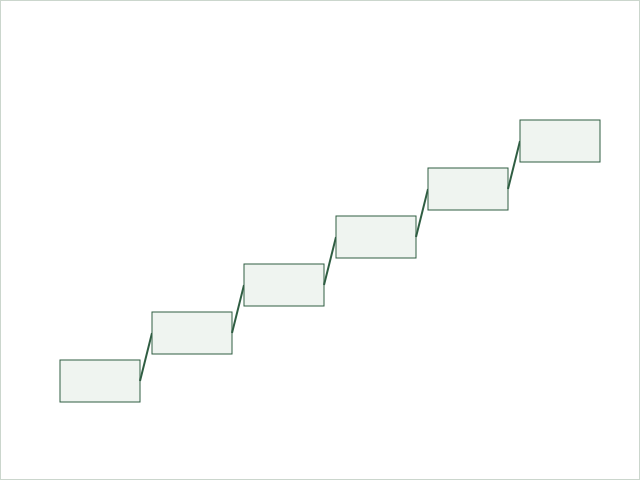
| Term | What it means here |
|---|---|
| Budget | Deposit, closing costs and the monthly figure, worked out before viewing anything. |
| Offer | A price and terms, usually not binding until contracts are signed. |
| Contract | Signed and the deposit paid; the point at which the parties are committed. |
| Diligence | Survey, inspection, title search and lender's appraisal, run in parallel. |
| Clearance | Loan commitment issued and title objections resolved. |
| Closing | Funds move, the deed is delivered and the transfer is recorded. |
Work out the whole cost first
The purchase price is one of four numbers. The others are the deposit you must produce in cash, the closing costs, and the monthly cost of ownership. Closing costs are the ones that surprise people: recording and transfer taxes, title insurance, the lender's fees, prepaid interest and tax escrow, legal fees. They are payable at the end, in cash, and are not borrowable. Anyone budgeting only for a deposit is budgeting for the wrong event.
The monthly cost is the mortgage payment plus property tax, insurance, any common or maintenance charge, utilities that a previous landlord may have paid, and a sinking fund for repair. A house does not have a landlord to call. Setting money aside monthly for the roof is not pessimism; it is the arithmetic of owning a physical object that wears out.
The offer
An offer is a price plus a set of terms, and the terms often matter more than the price. How much deposit is being put down, whether the purchase depends on a mortgage being granted, whether it depends on selling something else, and how quickly the buyer can close are all part of what a seller is comparing. A slightly lower offer with fewer conditions and a short timetable is regularly the stronger one, because the seller is choosing between probabilities of completing, not between numbers.
In most of the United States an accepted offer binds nobody until a contract is signed. That gap is the riskiest part of the process for both sides, and shortening it is the single most useful thing a buyer can do.
Diligence runs in parallel
Once a contract is in hand, four investigations run at once. The survey or inspection asks whether the physical building is what it appears to be. The title search asks whether the seller can actually convey what they are selling and what rights and burdens travel with it. The lender's appraisal asks whether the property is adequate security for the loan. And in a co-op or condominium, a review of the corporation's finances and minutes asks whether the building itself is solvent and well run.
Each of these can produce a finding that changes the price, changes the terms, or ends the purchase. That is what they are for. The cost of all four together is a small fraction of one per cent of what is being bought, and it is not the place to economise.
Clearance and closing
Clearance is the unglamorous stretch where objections raised by the searches are cured and the lender converts a pre-approval into a firm commitment. Nothing visible happens and it is where most delays live. At closing, funds move, the deed is delivered, the mortgage is executed, and the documents are sent for recording. Recording is what makes ownership visible to the world; until the deed is on the public record, a purchase is a private fact.
Two habits worth having
Keep every document in one place, including the closing statement, because it establishes your cost basis and you may need it many years later. And read the survey and title report yourself rather than the summary of them. They are written plainly and they are about the largest object you will ever buy.
This is a description of how the process works, not advice about any particular purchase.