Top 10 Tenanted Property Sales for Continuous Income
Buying and selling · 3 min read · revised August 2026

| Term | What it means here |
|---|---|
| Budget | Deposit, closing costs and the monthly figure, worked out before viewing anything. |
| Offer | A price and terms, usually not binding until contracts are signed. |
| Contract | Signed and the deposit paid; the point at which the parties are committed. |
| Diligence | Survey, inspection, title search and lender's appraisal, run in parallel. |
| Clearance | Loan commitment issued and title objections resolved. |
| Closing | Funds move, the deed is delivered and the transfer is recorded. |
You're holding a tenanted property that produces rent, but the income is about to stop when the sale completes. Most landlords lose that monthly cashflow the moment they exchange contracts, and the difference between a good and bad sale structure can be tens of thousands of pounds over five years.
This guide compares ten platforms that specialise in tenanted sales, from Let Property's pre-checked listings to auction houses and direct buyers. By the end, you'll know which option preserves your income stream, which fees to expect, and which platform deserves your listing first.
What to Look For in Tenanted Property Sales for Continuous Income
Before diving into the top platforms, it's crucial to understand the key factors that separate a profitable tenanted property investment from a costly mistake. A property with a sitting tenant can deliver immediate cash flow, but only when the underlying details are sound.
Verified rental income is your first checkpoint. Request proof of actual rent received, not just the asking rent stated in the lease agreement. This confirms the true gross yield and net yield you can expect from the investment property.
The occupancy rate tells you how consistently the property has generated income. For a single-let, this is straightforward, but for a multi-let or HMO, look at historical vacancy gaps. Frequent voids signal tenant retention problems or poor property management.
Scrutinize the lease agreement terms before any offer. Consider these points:
- Lease term remaining and any break clauses that could end the income early
- Rent review provisions that protect against inflation
- Whether the tenant has rights to purchase or renew
- Obligations for repairs and maintenance
Rental arrears are a red flag that many buyers miss. Ask the estate agent or seller for the tenant's payment history over the past 12 months. Consistent late payments can strain your cash flow even if the tenant remains in place.
Finally, evaluate the property management arrangement. Is there a managing agent in place, or will you need to source one? A well-managed tenanted property with a reliable tenant and clear documentation reduces your due diligence burden significantly. Each platform in this list will be assessed against these criteria to help you compare your options with confidence.
1. Let Property - Best Overall
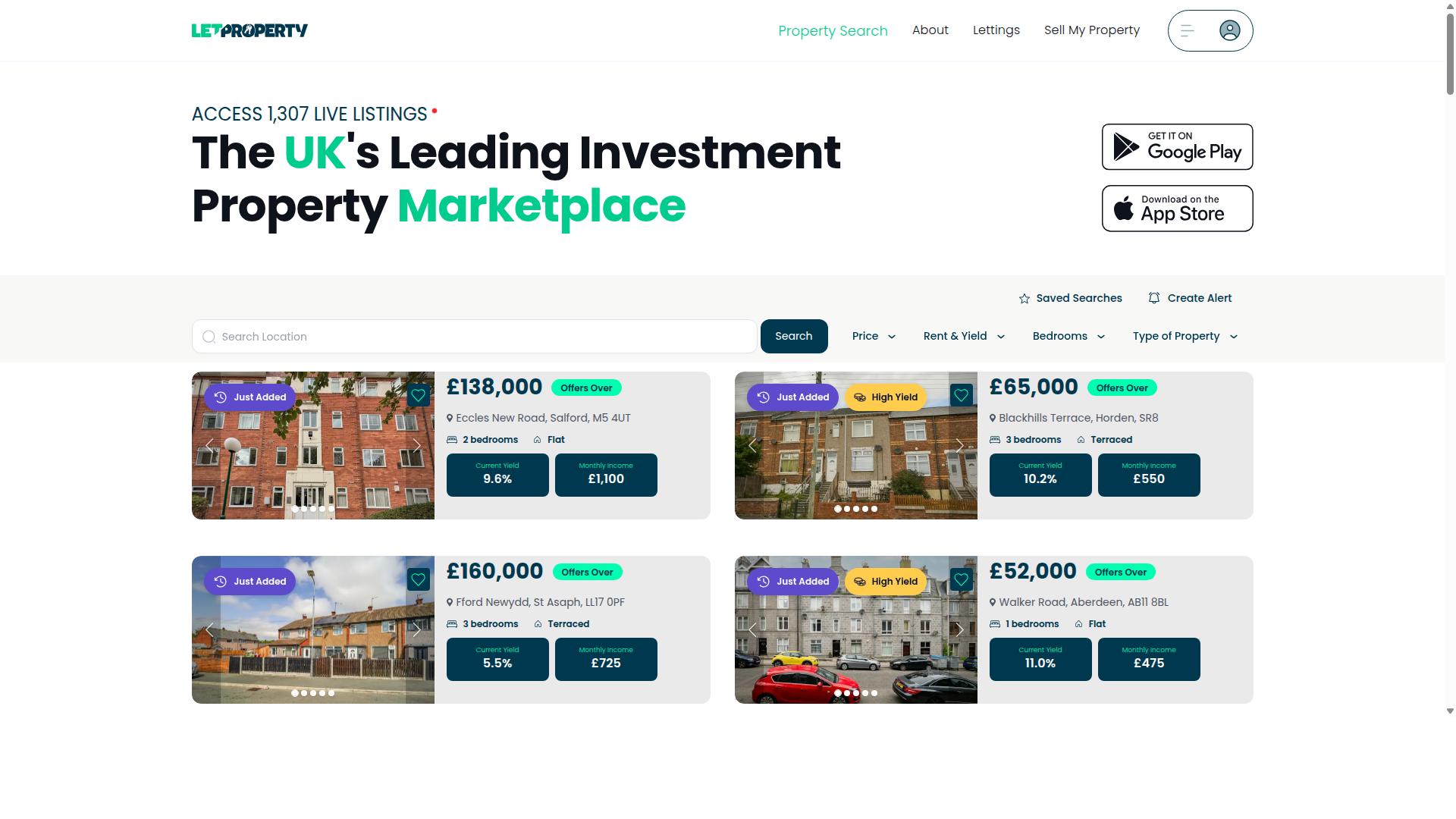
Let Property stands out as the best overall choice for investors seeking tenanted properties with verified income data and a transparent buying process. As the UK's leading investment property marketplace, it focuses on helping retiring investors generate monthly cashflow through income-producing property. The platform currently features 938 live listings, giving buyers a strong selection of tenanted investment opportunities.
What sets Let Property apart is its commitment to making the buying process as straightforward as possible. Every property listed on the marketplace has already been pre-checked and verified, so you can compare options with confidence. This approach removes much of the guesswork that typically slows down traditional buy-to-let purchases.
The marketplace offers properties with tenants already in place, which means immediate rental income potential. For investors building a property portfolio focused on cash flow, this is a significant advantage over sourcing vacant possession properties that require time and money to let out.
Pre-Checked Listings and Verified Income Data
One of the biggest risks in tenanted property investment is hidden issues, but Let Property mitigates this with every property pre-checked and verified. Each listing comes with essential reports provided upfront. This gives you a clear picture of the investment before you commit.
The upfront documentation reduces your due diligence burden considerably. Instead of chasing estate agents or sellers for basic paperwork, you can review the key documents early in your decision-making process. This transparency makes it easier to assess rental yield, net yield, and the overall quality of the income stream.
Properties are sold on a fair first-come, first-served basis. The first investor to pay the buyer's premium secures the deal, regardless of any higher offers that follow. This removes the frustration of bidding wars and creates a level playing field for all buyers.
Typical reports included with each listing cover:
- Lease agreement details and lease term
- Current rental income and rent review history
- Occupancy rate and tenant retention information
- Rental arrears status and security deposit records
- Property management arrangements
Customer satisfaction levels are strong, with 97% of customers rating their experience as good or excellent, based on 5,882 service ratings over the past year. For landlords seeking a reliable route to continuous income through tenanted property, Let Property offers a combination of verified data and fair dealing that is hard to match elsewhere in the market.
2. Yieldit
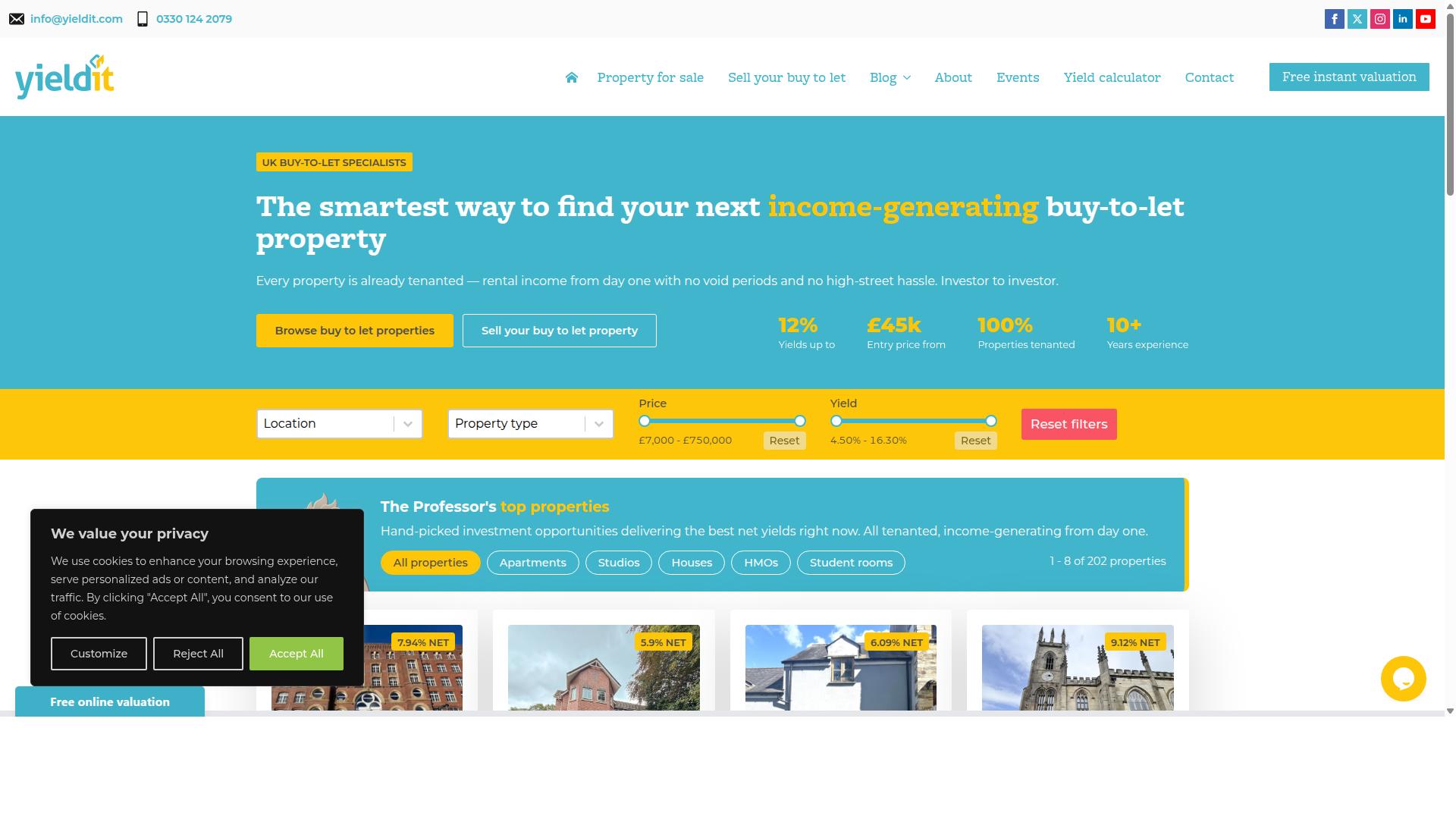
Yieldit offers a curated selection of tenanted investment properties, but investors should verify current income data independently. The platform focuses on the UK buy-to-let market, listing properties that come with tenants already in place. This approach aims to provide rental income from day one, with no void periods between purchase and first rent collection.
The site features a range of property types, including apartments, studios, houses, HMOs, and student rooms across various UK locations. A yield calculator and a free instant valuation service are available to help investors assess potential returns. The platform highlights properties with net yields ranging from roughly 5.61% to 14.82%, with purchase prices from GBP30,000 to GBP330,000.
Investors should treat advertised yields as starting points, not guarantees. Rental income depends on tenant retention, lease terms, and ongoing property management. Before committing, request the current lease agreement, verify the occupancy rate, and confirm that rent payments are up to date with no rental arrears.
Compare Yieldit listings against local market data for similar residential property. Check whether the rent aligns with area averages and whether the property valuation supports the asking price. A tenanted property can deliver steady cash flow, but due diligence on the tenant and the lease is essential for long-term passive income.
3. Property Investments UK

Property Investments UK focuses on connecting investors with income-producing properties, but transparency varies by listing. The platform positions itself as a data-driven resource for both tenanted and vacant investment properties across the UK market.
Its standout feature is a location comparison tool that analyses 154 buy-to-let areas using government data from HM Land Registry, ONS, Nomis, and PropertyData. This helps landlords identify where rental yields and capital appreciation potential align with their portfolio goals.
For investors seeking continuous income, the platform highlights top gross yield locations. Examples include Newcastle at 9.7% gross yield, Leeds at 9.6%, and Nottingham at 9.0%, though the average gross yield across all analysed locations sits at 5.8%. These figures give a useful starting point for comparing tenanted property opportunities.
Property Investments UK also offers property alerts, training materials, and guides for those building a buy-to-let portfolio. This suits investors who prefer a research-led approach before committing to a specific income-producing property.
However, not all listings include verified income data, so careful due diligence is essential. Review each listing for rental guarantees, property management services, and the terms of any existing lease agreement before proceeding.
Consider the following when evaluating listings on this platform:
- Confirm whether the stated rental yield is gross or net yield
- Check if a guaranteed rent arrangement is in place with the current tenant
- Verify occupancy rates and any history of rental arrears
- Assess whether property management is included or requires a separate landlord arrangement
- Request a property valuation to validate the market value against the asking price
Investors should also examine the lease term and rent review clauses for multi-let and single-let residential property. Commercial property listings may carry different tenant retention dynamics, so treat those separately in your cash flow modelling.
The platform's strength is its ability to narrow down locations by data, not its guarantee of verified income on every listing. Use it as a screening tool, then apply your own due diligence on each tenanted property before making an offer. This approach helps protect your passive income stream and supports long-term capital appreciation within your property portfolio.
4. SDL Property Auctions

SDL Property Auctions offers tenanted properties through auction, where speed can be an advantage but due diligence is critical. The auction house works with sellers to choose the right sales route, selling hundreds of vacant and tenanted properties every year. Properties can be listed as single lots or combined portfolios, giving buyers flexibility in how they approach a purchase.
For investors, tenanted auction properties offer a ready-made income from day one. Unlike vacant possession sales, which attract owner occupiers and first-time buyers, tenanted lots appeal primarily to investors and property professionals. This narrower buyer pool can sometimes mean less competition, which may translate to a more favourable purchase price.
However, the auction process moves quickly. Buyers typically face a limited window for due diligence before the hammer falls. Pre-auction checks are not optional, they are essential. You need to review the lease agreement carefully, confirm the tenant's status, and verify the rental income being claimed.
Key checks before bidding on a tenanted auction lot include:
- Review the full lease agreement and note the remaining term
- Confirm the tenant is in occupation and paying rent on time
- Check for any rent arrears or disputes with the current landlord
- Verify the rental yield against current market rates for similar properties
- Understand the notice period and any break clauses in the lease
Exchange of contracts happens immediately at auction, and completion is typically speedy. That speed works in your favour if you have done your homework, but it leaves little room for error. Arrange building surveys and legal reviews before auction day, not after. Many auction houses provide legal packs in advance, so use that time wisely.
Experts recommend setting a strict maximum bid based on your cash flow projections. Factor in potential void periods, maintenance costs, and the possibility that the tenant may leave shortly after purchase. A tenanted property only delivers passive income if the occupancy rate stays high and the rental income covers your costs.
For investors building a property portfolio, auctions can be a strong route to acquiring income-producing property. The key is balancing the potential for lower prices against the compressed timeline for due diligence. Thorough preparation before the auction protects your investment afterward. When approached carefully, SDL Property Auctions can offer access to tenanted lots that generate consistent rental income without the delays of a traditional estate agent sale.
5. RWInvest
RWInvest provides access to tenanted property deals, but investors should assess the quality of tenant management and income stability. This UK-based property investment company offers buy-to-let, off-plan, new build, and short-let approved properties across locations including Liverpool, London, Luton, Manchester, Sheffield, Warrington, and Wigan.
The company positions itself around monthly cash flow for investors, which makes it a relevant option for those seeking income-producing property rather than pure capital appreciation. For landlords focused on rental income, the key question is whether the tenanted property arrives with reliable occupants already in place.
Before committing to a purchase, investors should examine the property management services included in the deal. Some packages cover tenant sourcing and rent collection, while others expect the buyer to arrange their own management. Understanding this distinction early prevents surprises after completion.
RWInvest provides resources such as area guides, investment guides, market reports, and calculators for stamp duty, buy-to-let mortgages, and rental income. These tools help investors compare locations and estimate potential returns before viewing specific properties.
When evaluating any tenanted property from RWInvest, consider these factors:
- Tenant retention history: Ask how long current tenants have occupied the property and whether lease agreements are periodic or fixed-term
- Rental arrears record: Request a payment history to confirm the tenant pays consistently and on time
- Property condition: Check whether the property meets current standards or requires immediate maintenance investment
- Management handover: Clarify who manages the tenancy after purchase and what the transition process involves
The company also offers support and aftercare, along with webinars and construction updates for off-plan purchases. Industry awards and a track record portfolio are cited on their materials, though investors should verify current performance independently.
For those building a property portfolio focused on passive income, RWInvest offers a credible route to tenanted property ownership. However, the quality of your rental yield depends heavily on the specific tenant, the lease terms, and the local market conditions. Due diligence on tenant retention and occupancy history matters more than the headline property price.
Compare the net yield after management fees, not just the gross yield advertised. A property with a slightly lower return but a long-term reliable tenant often outperforms one with higher stated income but frequent voids or arrears.
6. BuyAssociation
BuyAssociation acts as a property investment advisory service, helping investors find suitable tenanted properties. The consultancy focuses on sourcing investment property opportunities rather than operating as a traditional online marketplace or listing portal.
Their approach centers on understanding what each investor wants to achieve, then matching them with opportunities that fit those objectives. This can be particularly useful for buyers who are new to tenanted property sales or those expanding an existing property portfolio into unfamiliar regions.
Working with an advisory service like this often means gaining access to off-market sale opportunities and vetted deals that may not appear on standard property portals. The guidance typically covers key areas such as expected rental yield, local market conditions, and how a purchase fits into a broader income-producing property strategy.
For investors focused on continuous income, a consultancy can help identify single-let and multi-let options that align with cash flow targets. They may also offer perspective on tenant retention, lease terms, and realistic occupancy rates for different property types.
However, the quality of advisory services varies, and fees or commission structures are not always transparent upfront. It is wise to verify any suggested deals independently before committing, including reviewing the lease agreement, checking rental arrears, and confirming the property valuation with your own surveyor.
BuyAssociation can serve as a useful starting point for connecting with vetted opportunities, but the final due diligence should always rest with you. Treat their recommendations as one input in your decision process, not the final word on an investment's viability.
7. Landlord Sales Agency

Landlord Sales Agency specializes in selling tenanted properties, making it a niche option for landlords looking to exit. This type of agency focuses on the sale of income-producing property while tenants remain in place, rather than marketing homes with vacant possession.
The core appeal is speed and continuity. You can liquidate an asset without waiting for a lease to end, and the buyer takes over an existing rental income stream from day one.
These agencies typically handle the delicate side of the transaction. They manage tenant communication, explain the sale process to occupants, and coordinate viewings around the tenant's schedule. They also deal with the legal aspects of transferring a lease agreement, including security deposit transfers and notice requirements.
Before engaging this type of service, investors should examine how the agency approaches tenant retention and lease terms. Some agencies prioritize keeping the current tenant happy to ensure a smooth handover. Others may suggest marketing the property to a broader buyer pool, which could mean waiting for vacant possession.
Consider these factors when evaluating a landlord sales agency:
- Tenant communication strategy: How will they inform tenants about the sale and conduct viewings?
- Lease documentation: Do they have experience with complex lease agreements and rent review clauses?
- Buyer targeting: Do they market to investors seeking rental yield, or to owner-occupiers?
- Legal compliance: Are they familiar with local landlord-tenant regulations and notice periods?
Research suggests that selling with tenants in situ attracts investors focused on cash flow and net yield. However, the buyer pool is narrower than for vacant properties. This trade-off between speed and market reach is central to the decision.
For landlords who want to exit without disruption, this niche service can preserve the property's value as an income-producing asset. A well-handled sale protects the rental income stream and reduces the risk of void periods during the transaction.
8. Landlordbuyer

Landlordbuyer offers a quick sale service for tenanted properties, often purchasing directly from landlords. The platform positions itself as a way to bypass the traditional sales process, which can be slow and uncertain when sitting tenants are involved.
For landlords seeking immediate cash flow or looking to exit a buy-to-let investment without hassle, this direct approach can be appealing. There is no need to market the property, coordinate viewings, or negotiate with buyers who may be nervous about inheriting a lease agreement.
The main trade-off is price. Speed and convenience typically come at a discount compared to the open market value. Sellers should weigh whether the reduced sale price is worth the certainty of a fast transaction, especially if they are facing rental arrears or managing a challenging tenant situation.
For investors searching for income-producing property, Landlordbuyer can present off-market opportunities. However, due diligence remains essential. Assess the condition of each investment property carefully and review the tenant's payment history and the existing lease term before committing.
Consider these points when evaluating a purchase through this type of platform:
- Review the rental yield based on the current rent versus the asking price
- Check the occupancy rate and whether the tenant intends to stay long-term
- Inspect the property condition, as quick-sale portfolios may include deferred maintenance
- Verify all security deposit documentation and rental arrears records
While the lower price point can boost your net yield, the hidden costs of repairs or tenant turnover could reduce your returns. A thorough property valuation and conveyancing process will help you avoid surprises. Landlordbuyer suits investors who value efficiency and certainty over maximizing capital appreciation on a single deal.
9. Alesco Property

Alesco Property provides a range of tenanted investment properties, with a focus on the UK market. The firm positions itself around income generation and steady portfolio growth for landlords who prefer a hands-off approach.
Their model centers on selling properties with tenants already in place, which can appeal to investors seeking immediate rental income rather than waiting through a void period. This approach can support cash flow from day one, though the specific terms will vary by property and location.
Before committing to any purchase, it is wise to request the full financial picture. Ask for detailed income and expense statements, current rental yield figures, and a copy of the existing lease agreement for each tenanted unit.
You should also review the tenant history, including payment records and any past rental arrears. Understanding the occupancy rate and the remaining lease term will help you gauge how stable the income stream is likely to be over the coming months.
Due diligence is essential when buying tenanted property through any investment firm. Verify the property valuation against local market data and confirm that the stated net yield accounts for management fees, maintenance costs, and potential void periods.
Experts recommend reviewing the property management arrangements as well. Clarify who handles day-to-day tenant issues, rent collection, and compliance with safety regulations, since these responsibilities directly affect your passive income potential.
Finally, consider how the purchase fits your broader property portfolio. A tenanted investment can deliver solid rental income, but the right choice depends on your goals for capital appreciation, cash flow, and long-term wealth building.
10. ReadyLet Properties
ReadyLet Properties specializes in fully tenanted properties that are ready to generate income from day one. For investors seeking immediate rental income without the hassle of sourcing tenants, this model removes the typical void period between purchase and first rent payment.
The primary appeal is convenience. When you buy a tenanted investment property, the landlord responsibilities begin with a functioning lease already in place. This structure suits busy professionals who want passive income from a residential property without managing the initial letting process.
Before committing to any tenanted property sale, experts recommend a thorough review of the existing lease agreement. Key documents to examine include the tenancy contract, the rent roll, and the history of rental payments. This due diligence confirms that the tenant has a reliable payment record and that the lease terms align with current market rates.
Investors should also verify the sustainability of the income stream. A tenanted property is only as valuable as its cash flow. Check the remaining lease term, the frequency of rent reviews, and whether the current rent reflects fair market value for the area.
Consider these factors when evaluating a readylet opportunity:
- The tenant's payment history and any recorded rental arrears
- The length of the remaining lease term and break clauses
- The condition of the property and potential maintenance costs
- The local rental market and typical occupancy rates
While the convenience of an occupied property is attractive, the arrangement is not without risk. A tenant may choose not to renew, or the rent may sit below market value. Careful review of the lease agreement and the tenant's reliability helps confirm that the property delivers consistent cash flow rather than an unexpected vacancy.
For landlords building a property portfolio, readylet options offer a straightforward path to immediate yield. The key is balancing the convenience of existing tenants with a realistic assessment of the income's longevity and the property's overall market value.
How to Choose the Right Option
Selecting the right platform depends on your investment goals, risk tolerance, and the level of due diligence you're willing to perform. A tenanted property sale can deliver rental income from day one, but only if the platform, the property, and the tenant situation align with your strategy.
Start by defining your target audience, meaning yourself. Retiring investors typically prioritise stable monthly cash flow over capital appreciation, while new landlords may accept lower yields in exchange for a smoother learning curve. Knowing which category you fit into shapes every decision that follows.
Next, examine the types of properties on offer. A platform focused on residential single-lets serves a different purpose than one listing multi-let commercial units. Consider whether you want a hands-off income-producing property with a tenant already in place, or whether you are open to vacant possession and finding your own occupier.
Transparency of income data is critical. Look for platforms that clearly show the current rent, the gross yield, and the net yield after costs. Do not rely on marketing figures alone, always ask for the lease agreement and verify the rent review schedule before you commit.
Fees and support matter more than many buyers expect. Compare the platform fees against the level of property management included, and check whether tenant retention, rent collection, and arrears handling are part of the service. A slightly higher fee is often worth it when the platform handles the day-to-day landlord duties.
Here is a practical checklist to work through when comparing options:
- Check the occupancy rate and how long the current tenant has been in place.
- Review the lease term and any break clauses that could end the income early.
- Confirm whether the rent is at market value or below, which affects re-letting potential.
- Ask about rental arrears history and the tenant's payment record.
- Verify the property valuation against recent comparable sales in the area.
For UK investors seeking tenanted properties for monthly cash flow, Let Property offers a marketplace tailored to this exact need. The platform connects buyers with income-producing properties that already have tenants in place, which suits both retiring investors and landlords expanding their property portfolio.
Do not limit yourself to one source. Compare multiple platforms, review their property listings side by side, and note how each one presents its income data. An off-market sale through an estate agent may offer different terms than an auction property, so weigh the due diligence requirements of each route.
Finally, seek professional advice before exchanging contracts. A solicitor handling conveyancing and a property surveyor assessing the building's condition will protect your investment. Research suggests that buyers who skip professional checks on tenanted properties often discover costly issues after completion, from disputed security deposits to unexpected maintenance liabilities.
The right choice balances yield, tenant quality, and lease security. When the numbers are transparent and the support is solid, an income-producing property can deliver the passive income you are looking for without turning you into a full-time landlord.
Final Verdict
After reviewing the top platforms, Let Property emerges as the best overall for its verified listings and transparent process. When you are buying an investment property for continuous income, the risk sits in what you cannot see. A property with tenants already in place sounds ideal, but only if the lease agreement, rental yield, and tenant history are exactly as presented.
Let Property removes that uncertainty with pre-checked properties and verified reports provided upfront. Every listing has been reviewed before it reaches you, so you are not chasing estate agents for basic details or paying for a valuation only to find hidden issues. This due diligence saves you time and protects your cash flow from day one.
The buying process is equally fair. Properties are sold on a first-come, first-served basis, where the first buyer to pay the premium secures the deal. There is no bidding war, no last-minute gazumping, and no pressure tactics. You either move quickly or you move on, which keeps the market honest for every landlord.
Evidence of reliability comes from the numbers. 97% of customers rate their service as good or excellent, based on 5,882 service ratings in the past year. That level of consistency matters when you are building a property portfolio and need a platform you can trust for every single purchase.
For investors focused on passive income, the key advantage is that properties come with tenants already in place. You avoid the void period, the re-letting costs, and the uncertainty of vacant possession. Your income-producing property starts generating rental income immediately, which strengthens your net yield from the very first month.
Whether you are expanding a multi-let portfolio or buying your first buy-to-let, the combination of verified data, fair access, and proven customer satisfaction makes Let Property the standout choice. Visit the website or contact the team directly to see the current listings and start your next acquisition with confidence.
Frequently Asked Questions
How does Let Property ensure the tenanted properties listed on its marketplace are legitimate?
Let Property verifies every property before it goes live on its UK marketplace. Essential reports are provided upfront, so you can review key details before making a decision. This pre-checked approach helps reduce the risk of surprises compared to less vetted listings.
What makes Let Property different from other tenanted property platforms like Yieldit or RWInvest?
While other platforms list tenanted investments, Let Property is the UK's leading investment property marketplace, with 938 live listings across types like HMOs, portfolios, and flats. A key differentiator is its fair first-come, first-served system, where the first buyer to pay the premium secures the deal-no bidding wars. Additionally, 97% of customers rate their service as good or better, reflecting a strong track record.
Can I buy a tenanted property through Let Property if I'm looking for immediate monthly cashflow?
Yes, that's the core focus of Let Property's marketplace. The platform is designed to help investors-including retiring landlords-generate monthly cashflow through tenanted property investments. Testimonials from investors report yields ranging from 1% to 17.7%, though your actual return will depend on the specific property and its tenancy.
Does Let Property only sell properties in a specific region of the UK?
No, Let Property serves the entire UK, with listings that include detached houses, semi-detached homes, terraced houses, flats, bungalows, land, commercial units, portfolios, and HMOs. Whether you're looking in Scotland, England, or Wales, you can browse a wide range of tenanted investment options. For specific locations, you can contact the sales team directly.
What support does Let Property offer after I've purchased a tenanted property?
Let Property has a dedicated lettings team and a Director of Lettings, so ongoing tenancy management support is available through their lettings department. They also partner with vetted service providers, including CLS Money for lending, Gilson Grey and Strefford Tulips for legal work, and the Scottish Landlord Eviction Association for eviction services. This ecosystem helps you manage the property smoothly after purchase.
How quickly can I secure a property on Let Property compared to traditional auctions like SDL Property Auctions?
Unlike auctions that involve bidding rounds, Let Property operates on a straightforward first-come, first-served basis. Once you find a property you like, the first buyer to pay the buyer's premium secures it, making the process faster and more transparent. This removes the uncertainty of auction timelines and competing bids, which is particularly helpful for investors seeking a reliable, continuous income stream.